How should I describe an AC that keeps starting and stopping?
Record the start and stop times from a safe location, the thermostat reading, and whether the indoor fan or outdoor unit stops. Short cycling means repeated incomplete cooling cycles; timing by itself does not establish the cause.
Record the pattern, not just the noise
From indoors or another safe position, write down a few start and stop times if the pattern is already occurring. Do not turn the AC back on to obtain a sample. Note whether the thermostat still calls for cooling when the equipment stops.
Try to tell the indoor fan sound from the outdoor unit. If you cannot tell which stopped, say so. Describe any click, hum, warning message, or change in airflow in your own words; there is no need to name a component.
Mention whether the behavior began after service, a thermostat setting change, or an interruption to power. Also note whether the rooms reach the requested temperature. A useful symptom record can be brief and does not require standing beside the equipment.
A short cycle is a symptom, not a part name
Short cycling means the AC starts and stops before it completes a cooling cycle. Airflow, refrigerant, thermostat, and control faults can all play a part. The size of the unit can also matter. The same stop-start pattern can need different repairs.
Frequent starts can add wear, and incomplete cooling cycles can leave humidity control poor. Those are reasons to have the pattern assessed; they do not prove that the compressor must be replaced.
Do not accept a system-size conclusion from one short run alone. If replacement is proposed because the unit is oversized, ask for the load assessment and the reasons other faults have been excluded. If a control is blamed, ask what testing supports that finding.
Avoid creating more restart attempts
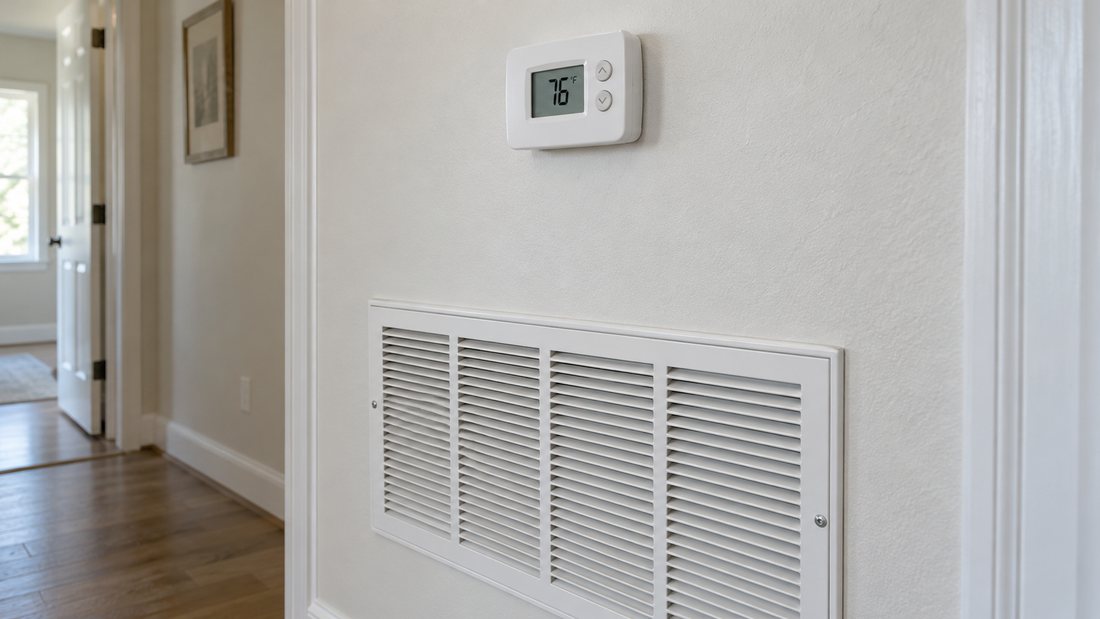
Check the normal thermostat mode and schedule without repeatedly moving the target temperature. Note a nearby heat source or direct sun on the thermostat, but leave relocation and wiring to a service visit. Record a displayed message before changing a user setting.
Look for obvious obstructions over accessible return grilles. Follow the owner's manual for a homeowner-accessible filter; do not alter blower speeds, move wires, or defeat a switch. If rapid cycling continues, turn cooling off at the thermostat and arrange service.
If the AC also shows ice, indoor leaking, or a tripped breaker, mention that first. Those symptoms change the safe next step. Leave the system off while the issue is assessed rather than trying to collect a longer video.
Make the proposed fix match the recorded fault
Keep your timing notes and any recent repair paperwork together. When calling us, explain whether the pattern occurs whenever cooling starts or only at certain times. Ask what access is needed to observe the problem and test it safely.
Before work begins, request the assessment charge and ask how an intermittent fault will be handled if it does not occur during the visit. Ask what was seen and what remains unknown. If the fault did not occur during the visit, ask how that limits the findings.
For a repair proposal, ask which fault it addresses, which parts are included, and what operating check follows the work. If replacement is offered, request it as a separate decision with its own scope. An equipment age or repeated click alone does not answer the repair question.
Questions about this repair
Is there one cycle length that proves a fault?
Do not use a single stopwatch threshold to choose a repair. Record the pattern, thermostat reading, and cooling result so the assessment can account for the equipment and conditions.
Should I change the thermostat to stop the cycling?
Confirm its normal mode and schedule, then leave wiring and replacement decisions to the assessment. The thermostat is one possible contributor, not the only one.
Does short cycling automatically mean I need a new AC?
No. Ask what was found and whether a repair addresses it. Any sizing or replacement recommendation should come with supporting measurements and a separate written scope.