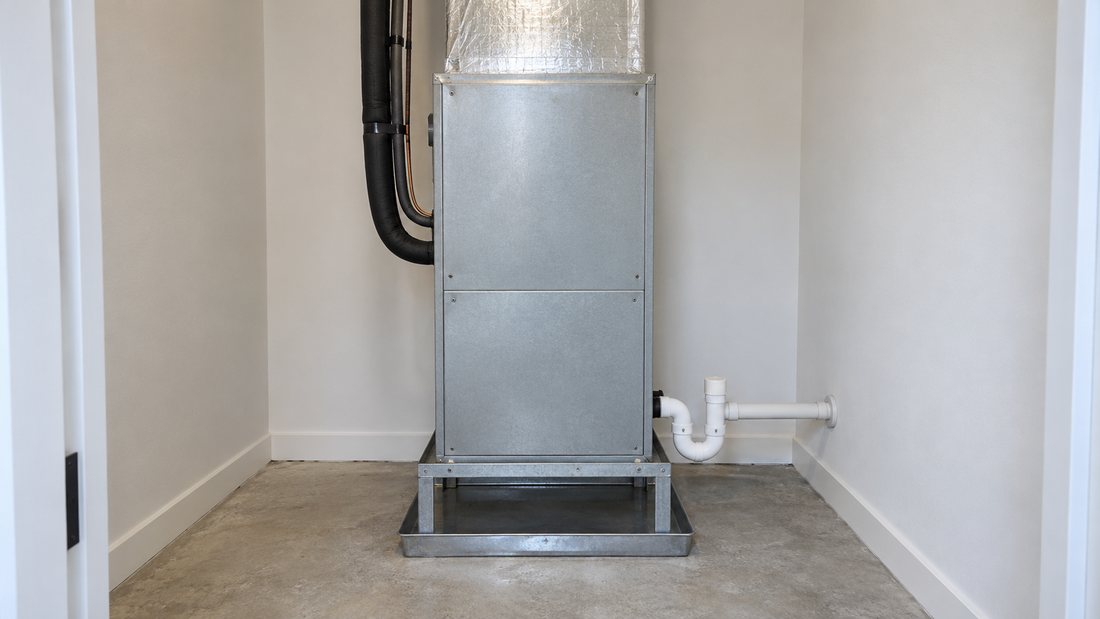
What should I do when AC water could reach the unit below?
Turn cooling off at a dry thermostat you can reach safely. Keep clear of wet electrical parts and tell building management about the active leak. Do not wait for a diagnosis before reporting water spreading outside your unit.
Stop adding to the leak
Do not run cooling to see whether the puddle gets larger. An AC removes moisture, and a blocked drain, damaged pan or thawing coil can allow that water into the room. Those possibilities require different repairs even when the floor looks the same.
Stay away from a sagging ceiling or water around lights and outlets. If there is immediate danger, leave the area and seek emergency help.
Record the route of the water
From a dry position, photograph the first wet spot and the edge of the spreading patch. Note whether the water began while cooling was running or continued after it stopped. Continued dripping does not by itself prove the shutdown failed. Stored water or ice may still be draining.
Tell the technician whether you saw ice before the leak, whether cooling had weakened, and whether this has happened before. Do not remove the air-handler panel to inspect the pan.
Coordinate the affected spaces
County information identifies North Naples as a district. Use the full street address and unit number for the request. A building name or mailbox ZIP is not enough to locate the equipment.
If another unit or a shared ceiling space may be involved, ask management to coordinate access. Do not promise entry to a neighbor’s home. Keep repair approval and building damage reporting as separate tasks.
Separate drainage repair from restoration
An AC check should show where the moisture originated and how the intended drain path failed. Clearing a line will not repair a cracked pan, and drying the floor will not correct the cause. Ask which condition was found.
Ceiling repairs, drying, mold assessment and insurance decisions are separate from this AC repair inquiry. Describe any damage when arranging service so the limits are understood before work begins.
Questions about this repair
Is a little water under the air handler normal?
Indoor pooling should be investigated. Moisture should follow the intended drainage path rather than escape onto the floor.
Can I pour cleaner into the nearest pipe?
Do not add chemicals or open an unidentified line. The drain layout and the material causing the problem have not been confirmed.