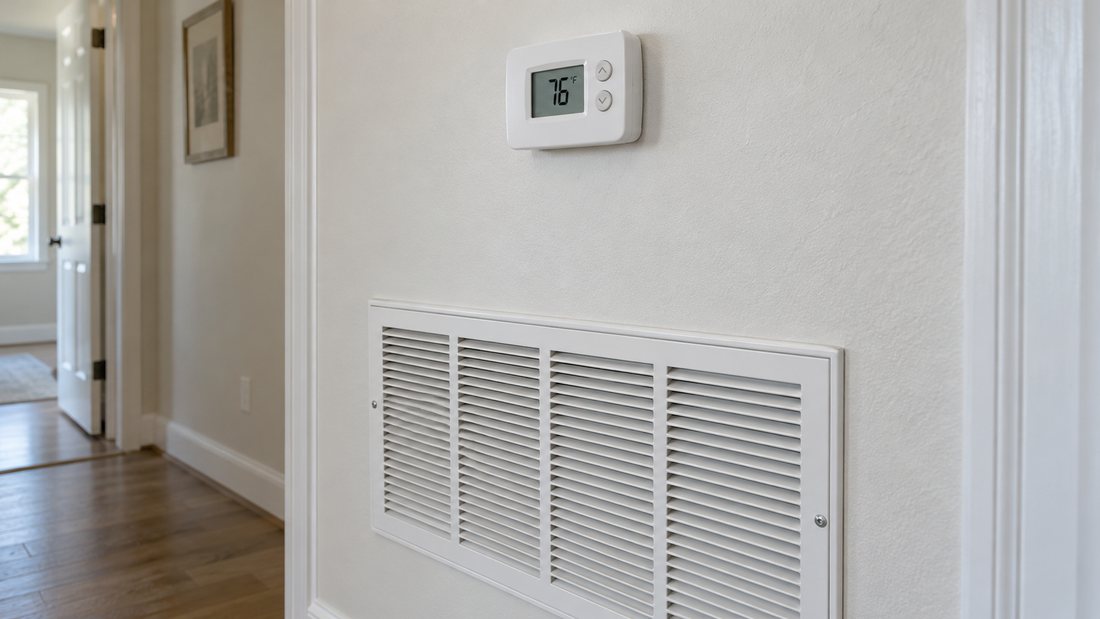
Does rapid cycling prove the air conditioner is too large?
No. A unit that is too large is one possible cause. Controls, airflow or another fault can also stop cooling too soon. The size should suit the home and its cooling needs. Floor area and unit age alone do not settle that question.
Avoid using repeated starts as a test
Stop cooling if the pattern comes with ice, escaping water or signs of an electrical fault. Otherwise, document what the system does at its normal setting. Do not again and again lower the target to see whether it will run longer.
A short run on a mild day can be normal. Repeated stops while the home stays warm are a different concern. A fixed number of minutes cannot tell you whether every system has a fault.
Separate an old pattern from a new fault
Say whether the problem began when the system was installed or started after it had worked well. Include any change to the thermostat, filter, rooms served or building layout. If the unit’s size has not changed, ask why a new fault is being blamed on its size.
Report both the room temperature and how it feels. A room that reaches its target but feels damp is different from one that never cools. Neither detail alone proves the AC is the wrong size.
Tie advice to the actual property
The County’s Golden Gate map shows Urban and Rural Estates as separate areas. Give the full address and describe the rooms the system serves. The Estates name does not say how much cooling the home needs.
If a new system is proposed, check which permit office handles the property. Collier County’s mechanical form lists A/C replacement. The address and proposed work decide the permit process, not the mailing label.
Request a measured replacement case
Ask which fault checks were done and how the proposed size was worked out. A quote for a new unit should still explain why the old one keeps starting and stopping. Can it be repaired? Is it working as designed? Is it the right size? Each question needs its own answer.
Keep new equipment or duct work separate from the repair. Agree on its purpose, access needs and approval first. Ask which fault a repair would fix and which comfort problems a new system would leave unresolved.
Questions about this repair
Is matching the old unit’s size a complete sizing check?
No. The size needs to suit the home and the rooms it serves. The old unit’s label alone is not enough.
Does an older refrigerant force replacement?
No. EPA does not require a new unit just because the old one uses R-22. Its condition and repair options still need to be checked.