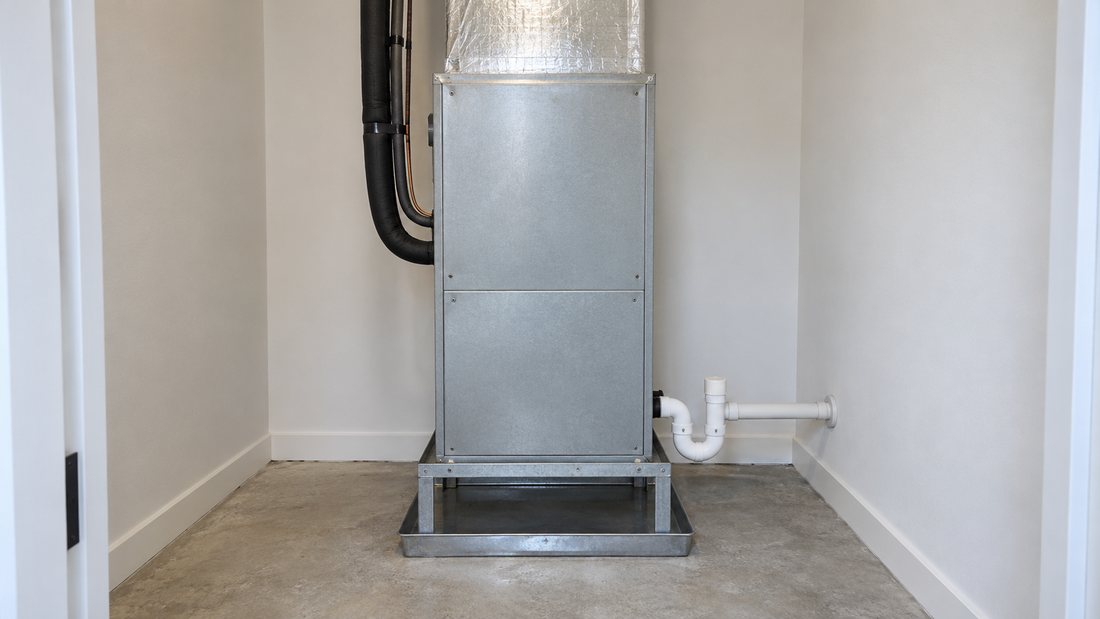
What should I do about water leaking from my AC?
Stop cooling if you can use the thermostat safely. Record where the water appears from a dry location and arrange a service check. Drainage, the collection pan, and melting ice are possible sources; a puddle alone does not identify which one failed.
Pin down the visible location
Describe whether the water is on the floor near the indoor unit, under a closet door, at a ceiling stain, or around a visible drain outlet. A photograph from dry, stable ground can preserve the location. Do not remove a panel or climb into the ceiling to make the description more precise.
Note when you first saw it, whether cooling was running, and whether visible ice was present before the water appeared. If the AC is already off, leave it off rather than restarting it to recreate the leak. Tell us about any shutoff message or loss of cooling that happened at the same time.
Follow the water, without assuming the repair
An air conditioner removes moisture as it cools. In a typical split system, that water collects at the indoor coil and drains away. Trane identifies a damaged pan, an obstructed condensate line, and a frozen coil among possible causes of indoor leakage.
Those faults need different work. Clearing a blocked line does not repair a cracked pan. Melted ice does not prove a drain fault caused the first freeze. Ask which part or path was checked and where the water escaped.
An outdoor drip is a different observation from water escaping indoors. Report the exact place instead of calling all visible water a refrigerant leak. Do not touch liquid you cannot identify or open a refrigerant line to check it.
Protect the area without approaching the hazard
After safely stopping cooling, keep people and pets away from the affected area. Move belongings only if you can do so from dry ground without touching the equipment or passing beneath a damaged ceiling. Leave entry to an unsafe area to trained help.
Leave drain chemicals, compressed air, improvised suction, and electrical covers out of the response. A drain route may be concealed or shared, and the source of the leak has not yet been confirmed. Do not bypass a float switch to restore cooling.
For a condo or rental, notify the property manager about water affecting a ceiling, wall, or another unit. Give the same location and timing notes to both the building contact and the person assessing the AC. That helps keep the equipment issue and the building damage in view.
Separate the leak repair from the damage it left
Ask whether the planned scope covers the source of the leak, the drain route, and a check that water can leave the system as intended. If a pan or drain needs replacement, ask how it will be accessed and what finishes may need to be opened.
AC drainage work does not establish that wet drywall, insulation, flooring, or electrical equipment has been assessed. Request separate advice for those affected materials and systems. A dry floor after cleanup does not prove that hidden dampness is gone.
Before approving work, confirm the assessment charge, the repair price, and who will arrange any building access. Keep photographs and the repair findings for the property owner or insurer if applicable; avoid making a coverage assumption from the cause of the leak.
Questions about this repair
Can I leave the AC running with a towel underneath?
Turn cooling off safely and arrange a service check. A towel does not address the water source, concealed damage, or electrical risk.
Does a puddle mean the drain is clogged?
A blockage is one possible cause. A damaged pan or thawing ice can also produce indoor water. The service check needs to find where it escaped before a repair is selected.
Is ceiling repair part of an AC water-leak repair?
Ask explicitly. Stopping an equipment leak and restoring damaged building materials are separate tasks. Confirm the scope and responsibility for each before work begins.